Saiyang Zhang
张赛旸
Theoretical & Computational Astrophysicist
Cosmic Frontier Center · Weinberg Institute · University of Texas at Austin
Theoretical & computational astrophysicist. Recent PhD from UT Austin (defended Aug 2026). Working on primordial black holes, early universe cosmology, and JWST observations.
01 / About
About Me
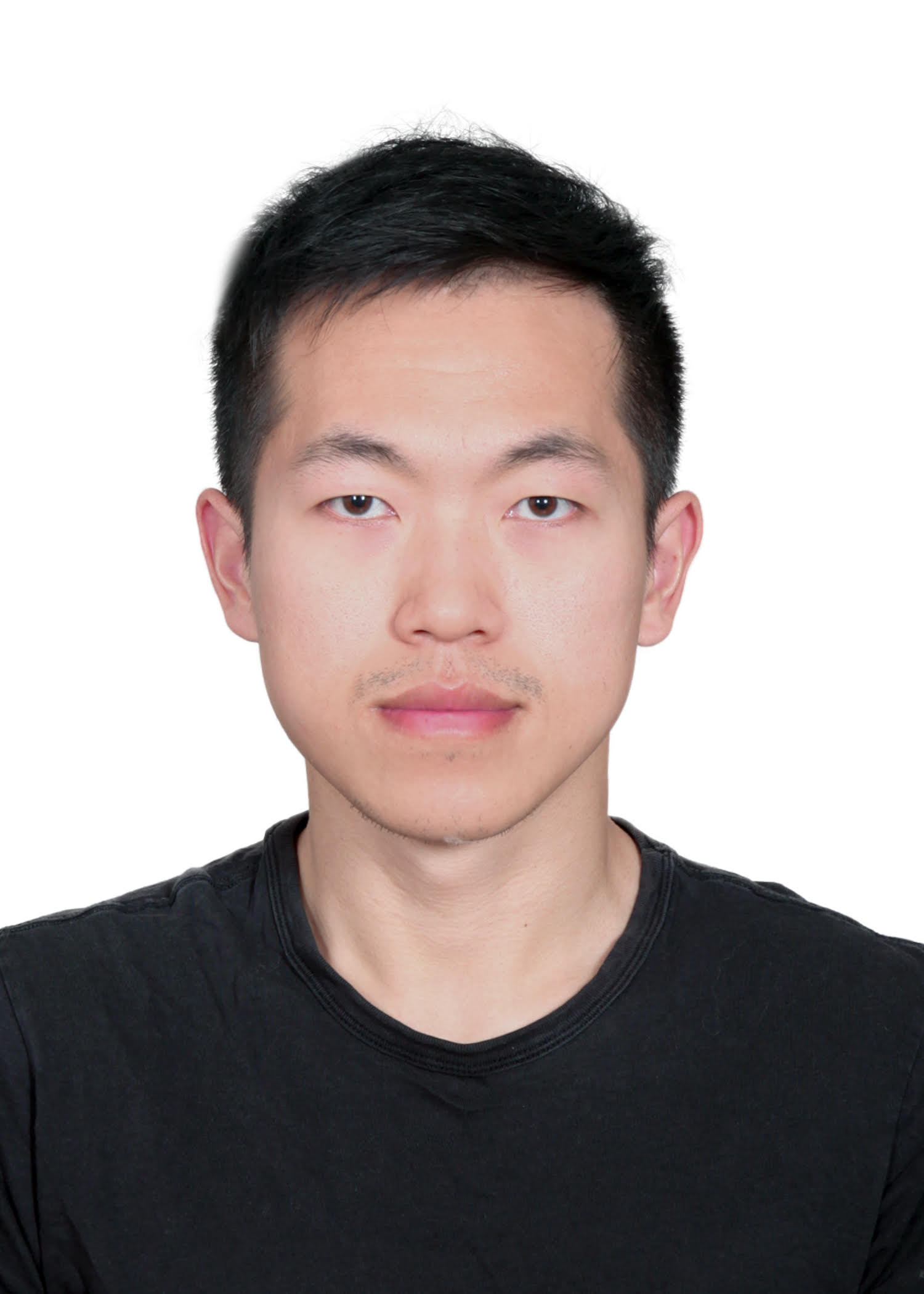
Growing up in Beijing, I developed a deep appreciation for science and the mysteries of the universe. After completing high school, I moved to the US to pursue undergraduate studies at Colgate University in Astronomy/Physics and Applied Mathematics.
I recently defended my PhD dissertation (August 2026) at the University of Texas at Austin, advised by Volker Bromm, specializing in theoretical and computational astrophysics. My research focuses on dark matter, the early universe, and cosmological evolution — studying dark matter candidates like Primordial Black Holes (PBHs), Weakly Interacting Massive Particles (WIMPs), Warm Dark Matter (WDM), and Self-interacting Dark Matter (SIDM), and their astrophysical effects on early universe objects like Population III stars and Supermassive Black Holes.
Beyond traditional astrophysics, I am increasingly interested in the intersection of machine learning and scientific discovery — particularly in applying large language models (LLMs) and simulation-based inference to accelerate research in cosmology and dark matter detection, as well as studying AI systems as a new domain of scientific inquiry.
Beyond my academic pursuits, I have a profound love for nature and sports. I enjoy downhill skiing, mountain hiking, football (⚽), and tennis. I have conquered four 14ers in Colorado, and there are more to go.
Research Interests
Education
Ph.D. in Physics
University of Texas at Austin · Cosmic Frontier Center · Weinberg Institute
Advisor: Volker Bromm · Aug 2020 – Dec 2026 (expected)
“Imprints of Primordial Black Holes over Cosmic History”
Dissertation defended Aug 2026, degree conferral Dec 2026
M.A. in Physics
University of Texas at Austin · Cosmic Frontier Center · Weinberg Institute
Advisor: Katherine Freese · Aug 2020 – Dec 2024
“Detecting Supermassive Dark Stars with the Roman Space Telescope”
B.A. in Astronomy/Physics & Applied Mathematics
Colgate University · Magna cum laude
Advisor: Cosmin Ilie · 2015 – 2019
Awards & Fellowships
Dissertation Writing Fellowship
UT Austin · 2025 · $24,000
Robert S. Davis and Lyell P. Davis Scholarship Fund
UT Austin · 2024 · $1,000
Graduate School Professional Development Award
UT Austin · 2024 / 2025 / 2026 · $2,250
APS DAP Student/Postdoc Travel Grant
American Physical Society · 2022 · $600
Joseph C. Amato & Anthony F. Aveni Award (Excellence in Thesis)
Colgate University · 2019
Referee: Astronomical Journal (AJ), Physical Review D (PRD), Physical Review Letters (PRL)
Peer Review Service · 2025–present
📸 Life Outside Research
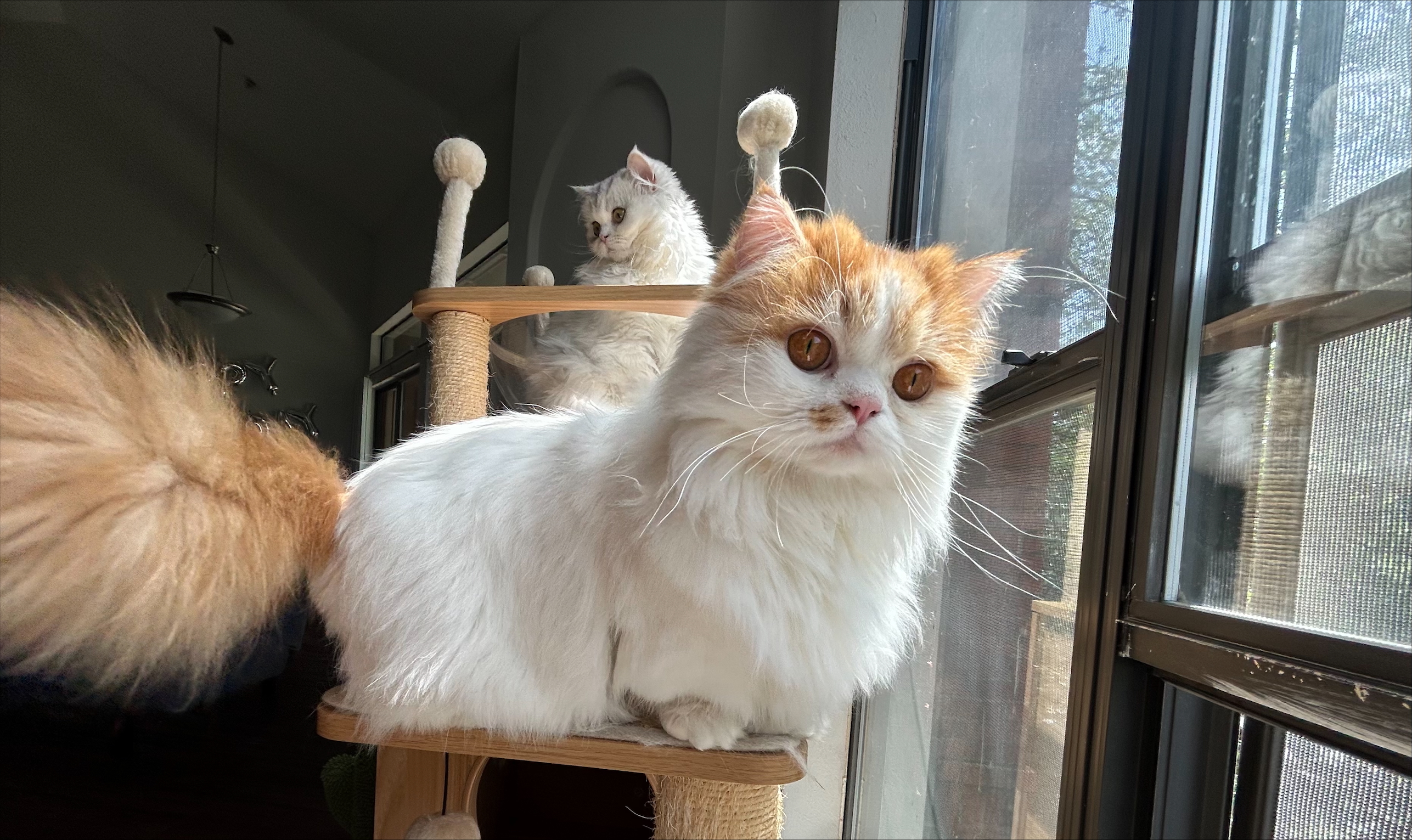
Sigma — my older cat 🐱
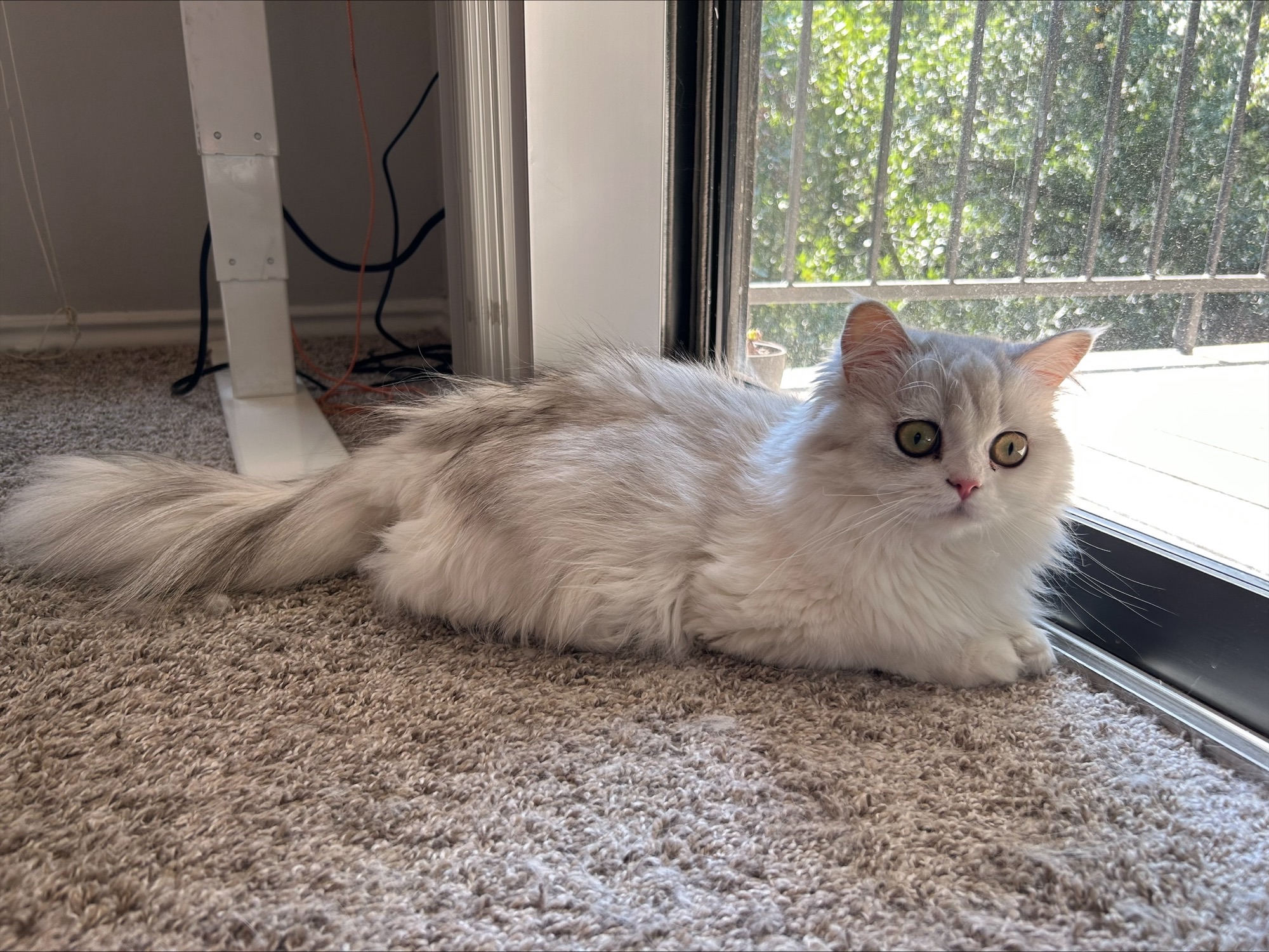
Eta — my younger cat 🐱
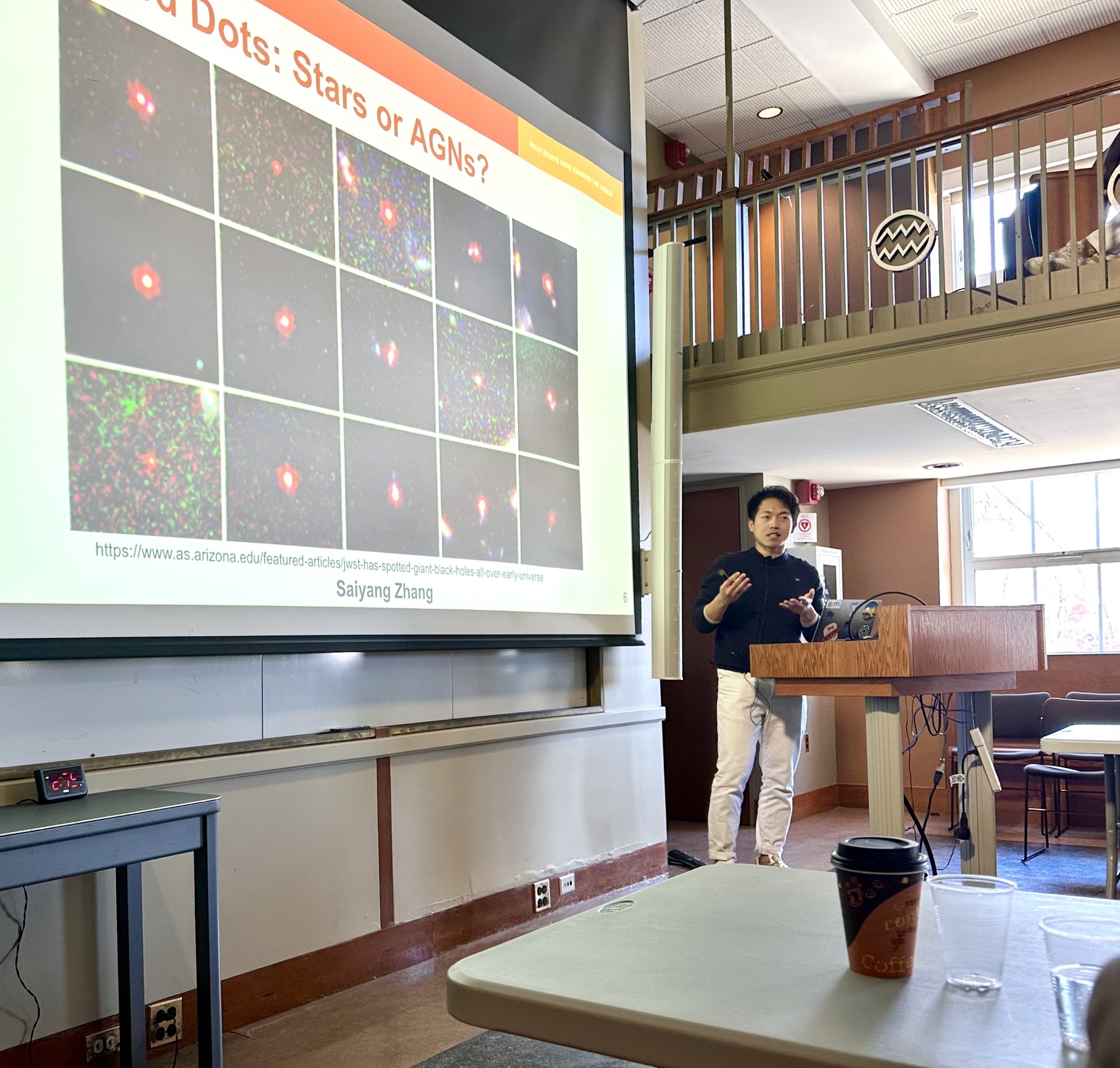
ITC Luncheon Talk, Harvard Center for Astrophysics 🎤 (Apr 2025)

Torreys Peak, Colorado 🏔️ (14,267 ft)
02 / Research
Research Areas
Bridging particle physics and astrophysics to uncover the nature of dark matter and the first objects in the Universe.
Primordial Black Holes (PBHs)
Dark Matter · Early Universe
Using N-body simulations with GIZMO and semi-analytical models to investigate PBHs’ astrophysical impacts — from influencing first star formation and cosmic radiation background during reionization, to seeding supermassive black holes like Abell2744-QSO1 observed by JWST. Future observations with JWST, Roman, and SKA will be critical in distinguishing PBH-driven structure formation from standard ΛCDM.
Read moreSupermassive Dark Stars (SMDSs)
Dark Matter · Early Universe
Supermassive dark stars are luminous stellar objects formed in the early Universe at redshift z∼10–20, powered by dark matter annihilation. Using Roman Space Telescope and JWST spectroscopy — particularly the HeII 1640 absorption line as a “smoking gun” — we can differentiate SMDSs from early galaxies via spectral, photometric, and morphological signatures.
Read moreParticle Dark Matter & Pop III Stars
Dark Matter
Pop III stars and neutron stars offer unique cosmic laboratories for probing particle dark matter microphysics in regimes inaccessible to terrestrial experiments. Developed a multiscatter capture framework to study DM particles gravitationally captured by stars, leading to observable consequences such as DM annihilation heating or stellar mass truncation. Extended to superheavy DM and constraints below the neutrino floor.
Read more03 / Press
Media Coverage
Research covered by international science media
Three supermassive black holes discovered in a single galaxy for the first time
📄 Related: Übler et al. 2026, A&A 712, A80 — BlackTHUNDER
NASA's Webb Reveals Black Hole That Formed Before Its Galaxy
📄 Related: Juodžbalis et al. 2026, Nature 653, 1017
Webb Reveals Black Hole That Formed Before Its Galaxy
📄 Related: Juodžbalis et al. 2026, Nature 653, 1017
Little Red Dot Abell2744-QSO1 — NIRCam Image
📄 Related: Juodžbalis et al. 2026, Nature 653, 1017
Sonification of Gas Velocity Around a Supermassive Black Hole
📄 Related: Juodžbalis et al. 2026, Nature 653, 1017
Astronomers Spot Black Hole That Formed Before Its Galaxy
📄 Related: Juodžbalis et al. 2026, Nature 653, 1017
📺 Video Coverage & Talks

2025's Biggest Breakthroughs in Physics
Features 'Little Red Dots' — covers Juodžbalis et al. 2026, Nature 653, 1017 (co-authored with Saiyang Zhang)
📄 Juodžbalis et al. 2026, Nature 653, 1017 [arXiv:2508.21748]

JWST's Discovery of Primordial Black Holes
Popular science coverage of JWST primordial black hole discoveries and Little Red Dots
📄 Zhang et al. 2026, ApJL 1000, L19 [arXiv:2512.14066]

Primordial Black Holes & JWST — ITC Luncheon Talk
Invited seminar at Harvard CfA — ITC Luncheon Talk series
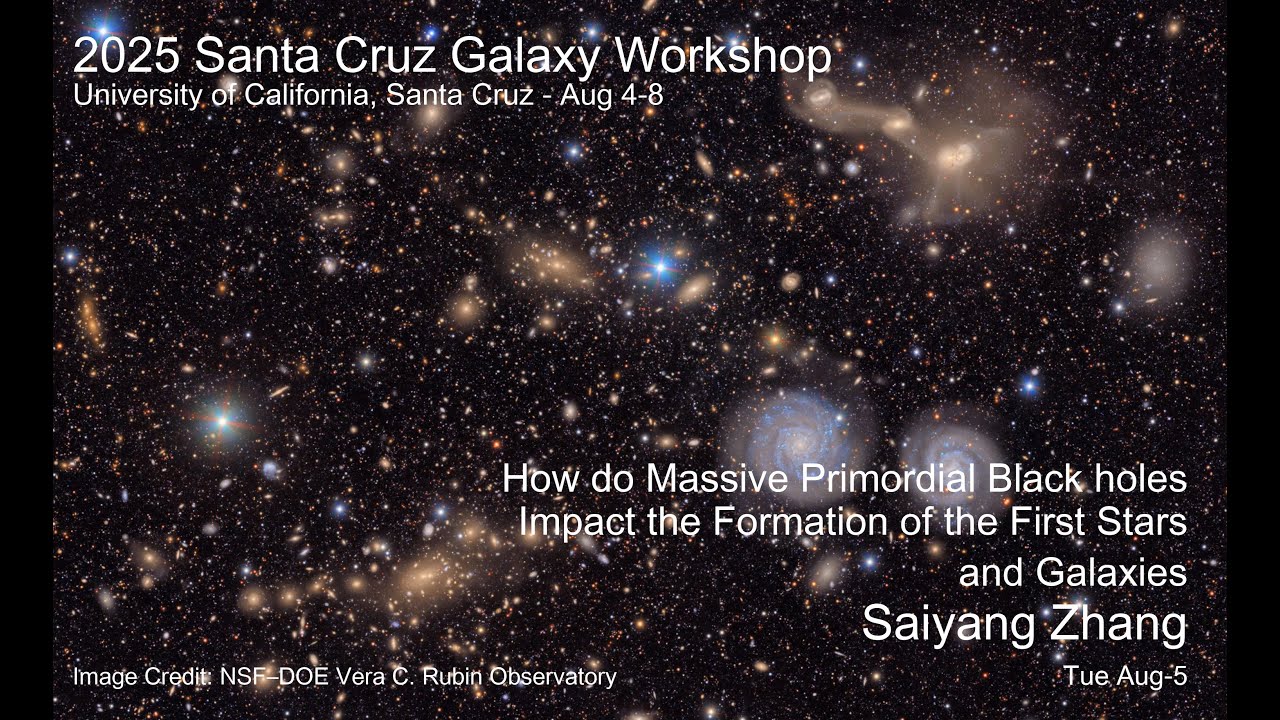
PBH Contributions — Santa Cruz Galaxy Workshop
Contributed talk at Santa Cruz Galaxy Workshop 2025
05 / Publications
Publications
h-index: 14 · 635 total citations · 9 first-author papers — Source: NASA/ADS
Showing 21 of 21 publications
Saiyang Zhang, Jeon, J., Liu, B., Bromm, V., Natarajan, P.
Submitted to The Astrophysical Journal (2026)
Ignas Juodžbalis, et al., Saiyang Zhang, et al.
Nature, 653, 1017-1021 (2026)
Roberto Maiolino, et al., Saiyang Zhang, et al.
Monthly Notices of the Royal Astronomical Society, 548(1), staf2109 (2026)
Saiyang Zhang, Boyuan Liu, Volker Bromm, Florian Kühnel
The Astrophysical Journal Letters, 1000(1), L19 (2026)
Jeon, J., Jeong, T., Saiyang Zhang, Bromm, V.
The Astrophysical Journal, 1006, 27 (2026)
Ivey, L., et al., Saiyang Zhang, et al.
Monthly Notices of the Royal Astronomical Society, 550, stag1220 (2026)
Hannah Übler, et al., Saiyang Zhang, et al.
Astronomy & Astrophysics, 712, A80 (2026)
Saiyang Zhang, Boyuan Liu, Volker Bromm
The Astrophysical Journal, 992, 136 (2025)
Saiyang Zhang, Boyuan Liu, Volker Bromm, Myoungwon Jeon, Michael Boylan-Kolchin, Florian Kühnel
The Astrophysical Journal, 987, 185 (2025)
Zhengyang Song, et al., Saiyang Zhang, et al.
Submitted to Nature (2025)
Saiyang Zhang, Volker Bromm, Boyuan Liu
The Astrophysical Journal, 975, 139 (2024)
Saiyang Zhang, Cosmin Ilie, Katherine Freese
The Astrophysical Journal, 965, 121 (2024)
Saiyang Zhang, Boyuan Liu, Volker Bromm
Monthly Notices of the Royal Astronomical Society, 528, 180 (2023)
Boyuan Liu, Saiyang Zhang, Volker Bromm
Monthly Notices of the Royal Astronomical Society, 514, 2376 (2022)
Cosmin Ilie, Carter Levy, Julia Pilawa, Saiyang Zhang
Physical Review D, 104, 123031 (2021)
Cosmin Ilie, Julia Pilawa, Saiyang Zhang
Physical Review D, 102, 048301 (2020)
Cosmin Ilie, Saiyang Zhang
JCAP, 2020(10), E01, 2020, E01 (2020)
Cosmin Ilie, Julia Pilawa, Saiyang Zhang
ArXiv Preprint (2020)
Cosmin Ilie, Saiyang Zhang
Journal of Cosmology and Astroparticle Physics, 2019, 051 (2019)
Z. R. Weaver, et al., Saiyang Zhang
The Astrophysical Journal, 875, 15 (2019)
Möbius Polarization of Non-Collinear Poincaré Superpositions
Enrique J. Galvez, Ishir Dutta, Saiyang Zhang
Latin America Optics and Photonics Conference, Tu3D-2 (2018)
PHANTOM
Open-source Primordial Black Hole simulation suite for cosmological N-body/hydrodynamical codes
Zhang, S. (2026)
06 / Talks
Talks & Presentations
● ● Invited · ○ ○ Contributed/Seminar · ◆ ◆ Poster
Astronomy Seminar
Thunch Talk
PACMAN Seminar
Galaxy Lunch
MAT Seminar
TEPAPP Seminar
Seventeenth Marcel Grossmann Meeting
Astrophysics Seminar
Physics Seminar
Extragalactic Theory Meeting
York+UofT Galaxy Journal Club
Group Meeting Talk
Group Meeting Talk
Texas Symposium on Relativistic Astrophysics
Extragalactic Discussion Group
Group Meeting Talk
Group Meeting Talk
CFC-CCA Workshop
International Workshop on the Identification of Dark Matter
APS April Meeting
Keck Northeast Astronomy Consortium
CFC2025
Dark Matter 2025
First Stars VII
Texas Symposium on Relativistic Astrophysics
Symposium in Honor of the Legacy of Vera Rubin
Rochester Symposium for Physics Students
07 / Contact
Get in Touch
Happy to discuss science, collaborations, or opportunities. Reach out anytime.
Built with Next.js · Tailwind CSS · Framer Motion
© 2026 Saiyang Zhang · All rights reserved